
When Financial Knowledge Reaches the Last Household


True financial empowerment takes root only when knowledge reaches those who need it the most. In rural India, where limited access to financial information often restricts opportunities, initiatives that bring clarity, confidence, and awareness can create lasting change. Guided by this belief, ISCI Foundation successfully organized Financial Literacy Camp (FLC) on 3 October 2025, delivering essential financial education directly to the villages of Janora, Daipura, Rajgadhiya, and Doliapura under the Para And Gormi branch region.
The camp was conducted in collaboration with the National Bank for Agriculture and Rural Development (NABARD) and Madhya Pradesh Gramin Bank (MPGB), reinforcing a shared commitment to strengthening financial inclusion at the grassroots level. The overarching goal of the initiative was not merely to provide information, but to enable rural families to make informed financial decisions that can safeguard their present and secure their future.
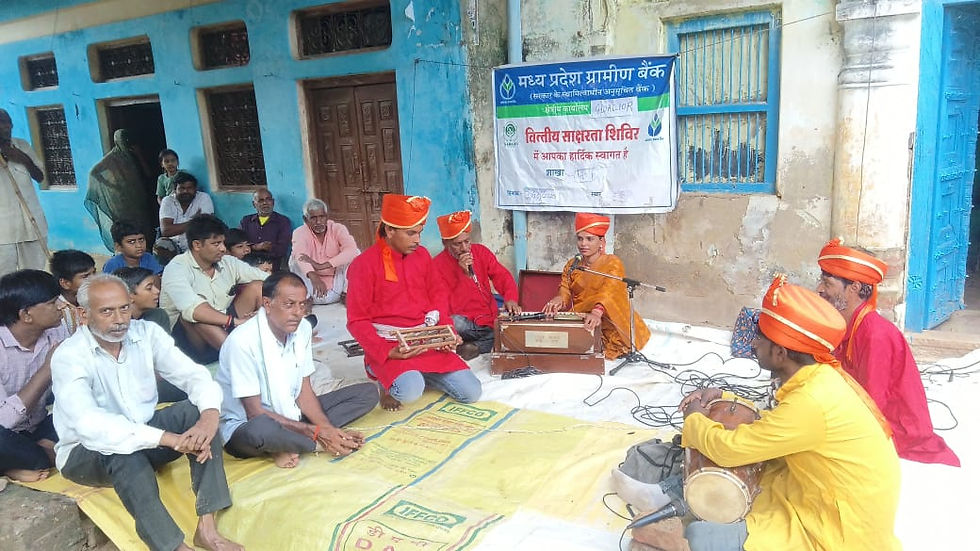
Across the four villages, the camps witnessed enthusiastic participation and open dialogue. A total of 24 participants from Janora, 50 from Daipura, 22 from Rajgadhiya, and 25 from Doliapura attended the sessions, reflecting a strong interest in understanding financial systems that directly impact daily life. Officials from MPGB played a vital role by engaging with villagers, clarifying banking processes, and responding patiently to questions. Their involvement helped bridge the trust gap that often exists between rural communities and formal financial institutions.
The presence and leadership of ISCI Foundation Director Mohit Modi added depth and direction to the program. Through his interaction with participants, he emphasized the importance of financial awareness as a tool for independence, stability, and dignity. His guidance reinforced ISCI Foundation’s long-term vision of empowering communities through knowledge-driven development rather than short-term interventions.
Opening Doors to Security Through Government Welfare SchemesOne of the most critical aspects of the Financial Literacy Camp was raising awareness about government-backed financial security schemes designed specifically to support low- and middle-income households. Many participants were hearing about these schemes in detail for the first time. The sessions focused on Pradhan Mantri Jeevan Jyoti Bima Yojana (PMJJBY), Pradhan Mantri Suraksha Bima Yojana (PMJBSY), and Atal Pension Yojana (APY).
Each scheme was explained in a simple and structured manner, covering eligibility requirements, annual or monthly contribution amounts, benefits, and long-term coverage. The facilitators emphasized how even small, affordable contributions could provide significant protection against unforeseen circumstances such as accidents, loss of life, or old-age financial insecurity. Villagers expressed relief upon learning that these schemes were accessible and designed with their needs in mind.

By demystifying these programs, the camp enabled participants to see social security schemes not as complex government policies, but as practical tools that could offer peace of mind and stability to their families. This understanding marked an important step toward encouraging enrollment and long-term financial planning within rural households.
Opening Doors to Security Through Government Welfare SchemesAnother major focus of the Financial Literacy Camp was strengthening the foundational understanding of banking and savings. Many villagers had bank accounts but lacked clarity on how to use them effectively. The sessions covered essential topics such as savings accounts, fixed deposits (FDs), recurring deposits (RDs), and the importance of consistent saving habits.
Using relatable examples from everyday life, facilitators explained how regular savings, even in small amounts, could help families manage emergencies, plan for education, or invest in future opportunities. Participants were encouraged to view banks as partners in their financial journey rather than institutions to fear or avoid. Common misconceptions about banking procedures were addressed, helping to reduce hesitation and build confidence.
These discussions played a crucial role in shifting mindsets from informal saving practices to structured financial planning. For many participants, the session marked the beginning of a more organized and disciplined approach to managing income and expenses.
.
Protecting Communities from Digital Threats and Financial ExploitationCyber fraud awareness emerged as one of the most impactful and engaging segments of the camp. With the rise in digital transactions, rural communities are increasingly vulnerable to fraudulent activities due to limited exposure and awareness. Participants were educated about common cyber fraud methods such as fake phone calls, fraudulent messages, OTP scams, and malicious links.
The facilitators stressed the importance of never sharing sensitive information such as PINs, OTPs, or bank details with unknown individuals. Participants were also informed about the 1930 Cyber Crime Helpline, enabling them to take immediate action in case of suspected fraud. This information was received with particular interest, as many villagers shared personal experiences or near encounters with fraud attempts.

The discussion not only increased awareness but also empowered participants with actionable knowledge, helping them feel more secure and prepared in an increasingly digital financial environment.
A Commitment Beyond Camps: ISCI Foundation’s Vision for Rural Empowerment
The overall response to the Financial Literacy Camp across all four villages was highly positive. Participants described the sessions as practical, easy to understand, and directly relevant to their daily lives. Many expressed newfound confidence in visiting banks, asking questions, and making informed financial decisions. Women participants, in particular, showed strong interest in savings schemes and insurance options, underscoring the role of financial literacy in enhancing women’s empowerment and household stability.
Addressing the gathering, ISCI Foundation Director Mohit Modi reiterated that financial literacy is not merely about understanding money, but about building independence, resilience, and self-reliance. He emphasized ISCI Foundation’s commitment to ensuring that rural families are equipped not only with information but also with the confidence to apply it effectively.
Through initiatives like the Financial Literacy Camp, ISCI Foundation continues to reaffirm its dedication to inclusive, sustainable, and impactful rural development—where informed choices today lay the foundation for a secure and empowered tomorrow.


Comments